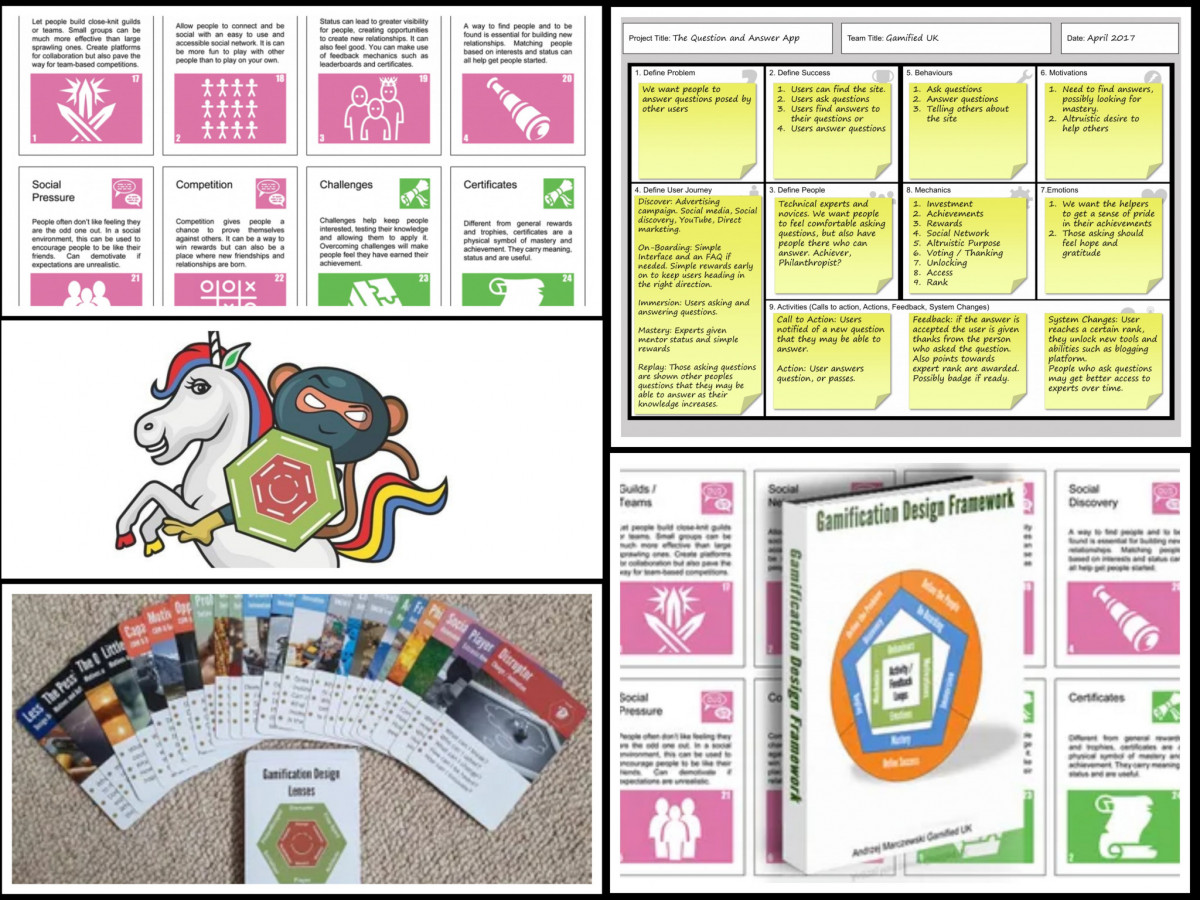
The Gamified UK Value Pack for ONLY £9.99

Collage The Gamified UK Value Pack for ONLY 9 99

Act Fast and Get Over £50 Worth of Gamification Content and Tools for ONLY £9.99! Become a Gamification Pro with the Ninja Monkeys Unicorn Edition eBook and Other Premium Content Included in This Bundle. Don’t Miss Out on This Incredible Offer – Start Building Your Gamified Solutions Toda

This bundle includes all of my premium content.  Even Ninja Monkeys Unicorn Edition eBook (which contains some content, not in the normal retail versions), Gamification and Solution Design Lenses, Inspiration Cards and my Gamification Framework Design Toolkit Read More ...
Reading, Rewards and How to Accidentally Kill Joy

File 00000000ae3071f49cedefc3e82a6dc0 Reading Rewards and How to Accidentally Kill Joy

I recently ranted on LinkedIn about my youngest child’s school using attendance awards to encourage children to achieve 100% attendance. You can read that if you want my views on that particular bit of educational nonsense, but this rant is not about attendance.

This is about reading.

More specifically, it is about how a well-intentioned reward system managed to take something joyful, meaningful and personal, and turn it into a badge-chasing exercise.

When Reading Became a Quest

My youngest used to be an avid reader. Properly enthusiastic. The sort of child who would disappear into books because she wanted to, not because someone had built a laminated progress chart and started handing out shiny things. Read More ...

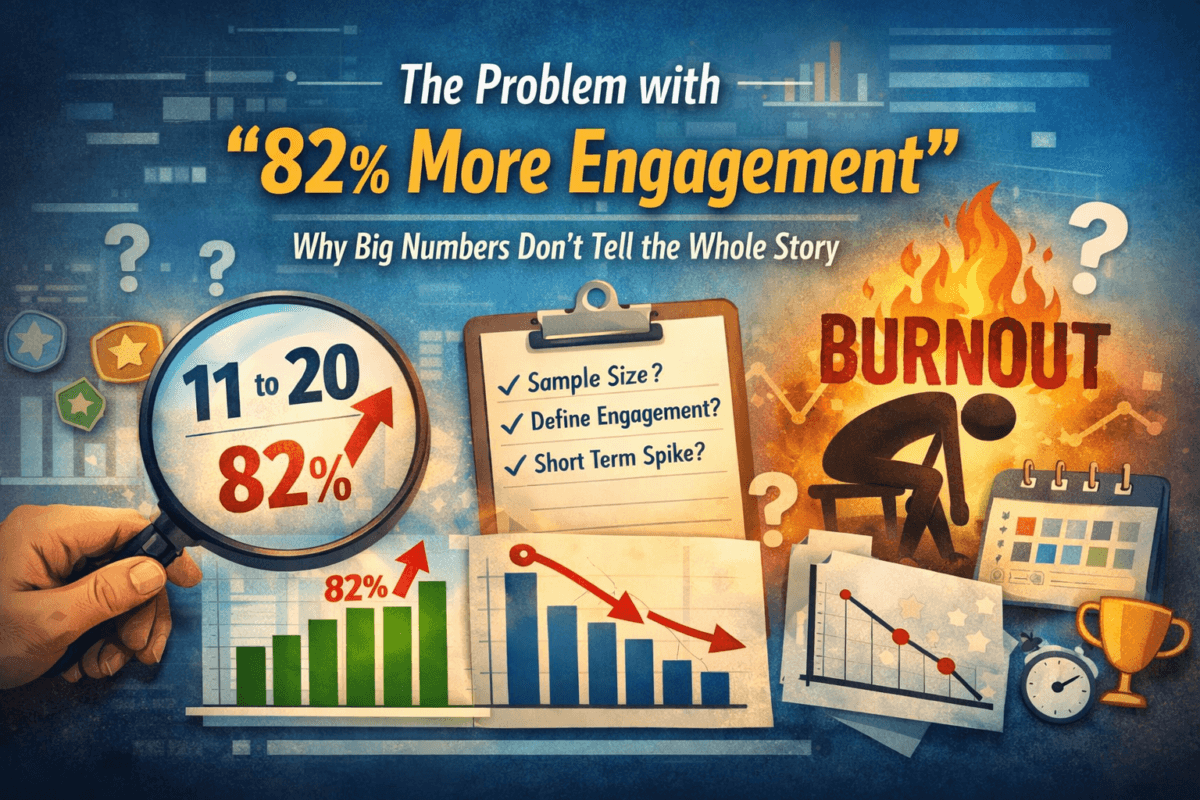
The Problem with “82% More Engagement”

File 000000001100722f8ee641db0e336e34 The Problem with 82 More Engagement

I love statistics. They are wonderfully effective at hiding the truth.

Gamification has been especially guilty of this over the years. We have all seen the headline:

“82% increase in engagement after gamification was introduced.”

It sounds impressive. On its own, it means almost nothing.

An 82% increase could mean engagement went from 11 people to 20 people. That is a real improvement, but it is hardly the same as the grand transformation the headline suggests. If the programme only involved 50 people, the number looks even less dramatic once you see the actual scale. Read More ...

SOAP Atoms: Designing Stories That Help People Keep Going

File 0000000060c471f7af5871767d4180cc 1 SOAP Atoms Designing Stories That Help People Keep Going

Narrative is one of those things people love to overcomplicate. Give someone the word “story” and they immediately reach for epic arcs, heroes, destinies, and some poor character being forced to fundamentally transform themselves by Act Three. That’s all very well if you’re writing films, but it’s far less helpful if you’re designing experiences for real people, in real contexts, on real days where they’re tired, distracted, and just trying to get through.

Over the years, I’ve talked a lot about Narrative Atoms and the Soap Hero’s Journey. They came from the same place: a frustration with big, monolithic narratives that look great on slides and fall apart the moment they meet reality. Read More ...

The Measurement Manifesto

File 000000007f7071f4af629c99cc1ba1a1 The Measurement Manifesto

Whilst I was working on the Dynamic Narrative Analytics  framework, I started writing this little manifesto. I thought I’d share it with you.

If you can’t measure it, you can’t trust it. If you can’t understand it, you can’t learn from it. If you can’t explain it, you can’t justify it.

Failure so often starts when opinion is presented as evidence and instinct is defended as proof. “I think” gets conflated with “I know” long before it earns that right. Real progress is a transition. From I think, to I know, to you know and you trust that I know. That transition does not come from more data. It comes from the right data and better measurement. Read More ...

The Cost of Cute: When Your Gamification Stops Serving Its Purpose

File 000000001fd871f5b26dee2f9781c1d1 The Cost of Cute When Your Gamification Stops Serving Its Purpose

Recently my friend David Chandross wrote a great post about how serious games often miss their purpose, becoming more game than serious if you will. That it’s becoming less and less about the learning. That inspired me to reemphasise something I wrote about a while back.

Gamification should help people do things better. That’s it. But somewhere along the way, too many designers decided that the point was to make people play their systems, rather than benefit from them.

It’s easy to spot. You open an app or a training program and you’re immediately pulled into some shiny loop of collecting things, hitting targets, and chasing streaks. The problem is, you’re no longer learning or improving, you’re just playing. The system has become the goal. Read More ...